
Maintaining a garden year-round requires choosing the right tools for each task rather than accumulating underused equipment. Good gardening equipment is defined by its ability to cover multiple seasonal tasks, its durability, and its ease of maintenance.
Repairability and lifespan: the criteria that change the calculation
Before comparing purchase prices, one parameter deserves to be checked on the label or product sheet: the repairability index. This score, already applied to certain electric lawnmowers, evaluates the technical documentation, ease of disassembly, and availability of spare parts.
Since 2023, certain motorized gardening tools are subject to a requirement for spare parts availability for at least five years. An electric pruner or a brush cutter with accessible blades and batteries for a long time will cost less over time than a budget model without replacement parts.
Three points to check before any motorized purchase:
- The repairability score, when displayed, which summarizes access to parts and the complexity of disassembly.
- The catalog price of consumables (blades, filters, batteries) compared to the price of the device, a ratio that reveals the manufacturer’s strategy.
- The duration of the manufacturer’s warranty and the existence of a local repair network, as a tool sent back to the factory can immobilize the garden for weeks.
Choosing equipment available on Info Jardinage with a good repairability score means integrating the real cost over several seasons rather than just the shelf price.
Pruning and soil working tools: the versatile foundation
Competitors readily list dozens of tools. In practice, four hand tools cover the majority of tasks in a medium-sized garden: a pruner, a spade, a cultivator, and a rake.
The pruner is used from spring to autumn (pruning roses, maintaining shrubs, harvesting in the vegetable garden). A bypass model is suitable for green and tender wood, while an anvil pruner is more suitable for dry branches. Sharpening the blade at the beginning of the season reduces effort and limits damage to plants.
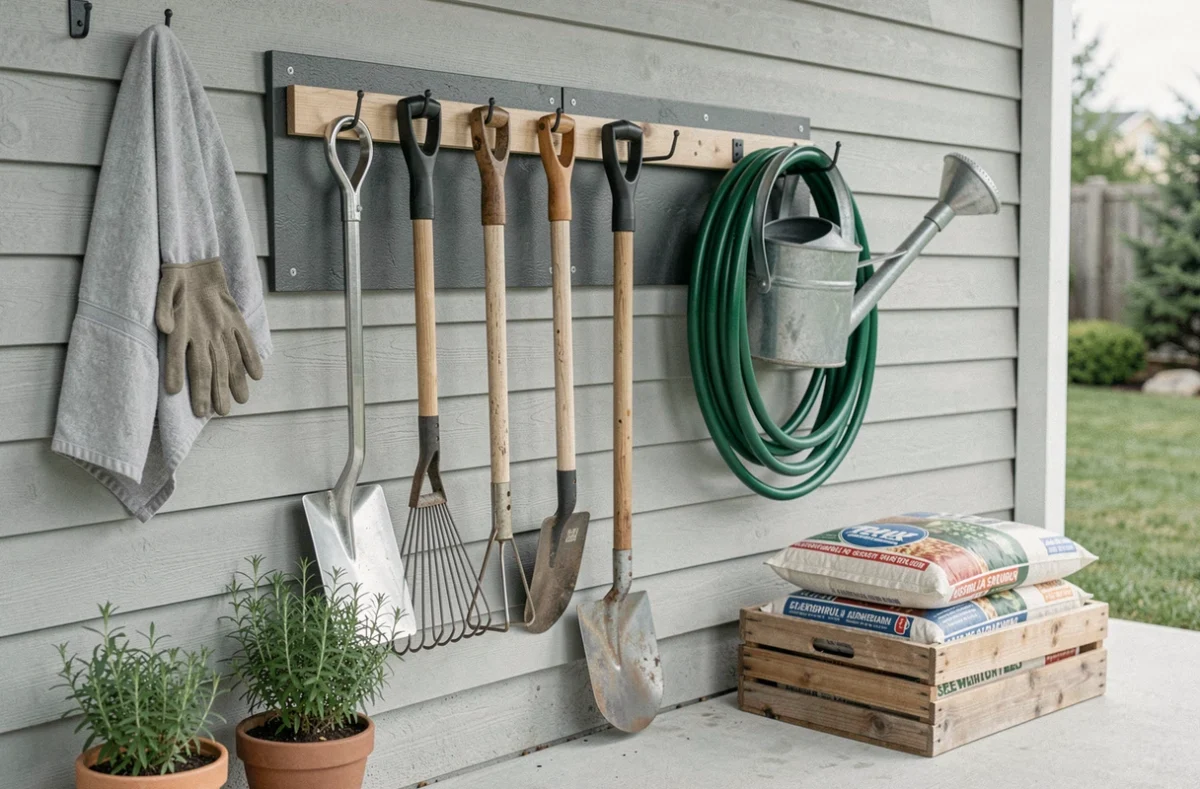
The spade and cultivator work together on the soil. The spade turns the earth deeply during spring or autumn preparations. The cultivator loosens the surface without disturbing the microbial life. Alternating between spade and cultivator preserves the soil structure while making it suitable for sowing and planting.
The rake, often relegated to leaf collection, also plays a role in leveling after plowing and preparing the seedbed. A single rake with rigid tines, complemented by a lawn broom for autumn, is sufficient in most cases.
Tool maintenance between seasons
A rusty or dull tool requires more effort and damages plants. After each intensive use, a quick brush to remove soil, a dry wipe, and a pass of the blade on a sharpening stone can extend the lifespan by several years. A few drops of linseed oil on wooden handles prevent splintering.
Garden watering year-round: automate without wasting
Watering is the area where automation brings the most significant time savings. A watering timer connected to a drip irrigation system delivers water at the base of plants, reduces evaporation, and frees up time each week.
A often overlooked point: a timer does not exempt you from checking local watering restrictions. During drought periods, prefectural orders may limit or prohibit certain uses of water, and the rules vary by territory and alert level. The VigiEau site allows you to check the current guidelines for a given address.
Rainwater harvesting complements the system. A collector connected to a downspout supplies watering for the vegetable garden and flower beds without drawing on the mains. The capacity to choose depends on the roof area and estimated needs, but even a modest model covers a significant part of the summer watering for flowers and herbs.
Lawn mower robot and garden wildlife: a setting not to be neglected
The lawn mower robot is the device most often mentioned when talking about simplified lawn maintenance. It mows autonomously, mulches the cuttings, and maintains an even lawn without intervention.
Its nighttime use poses a documented problem. The LPO recommends programming mowing during the day to protect hedgehogs, which are active at night. The mechanical safety standard for lawn mower robots does not guarantee the detection of small animals. Setting the start time in the morning or early afternoon is enough to reduce this risk without losing efficiency.
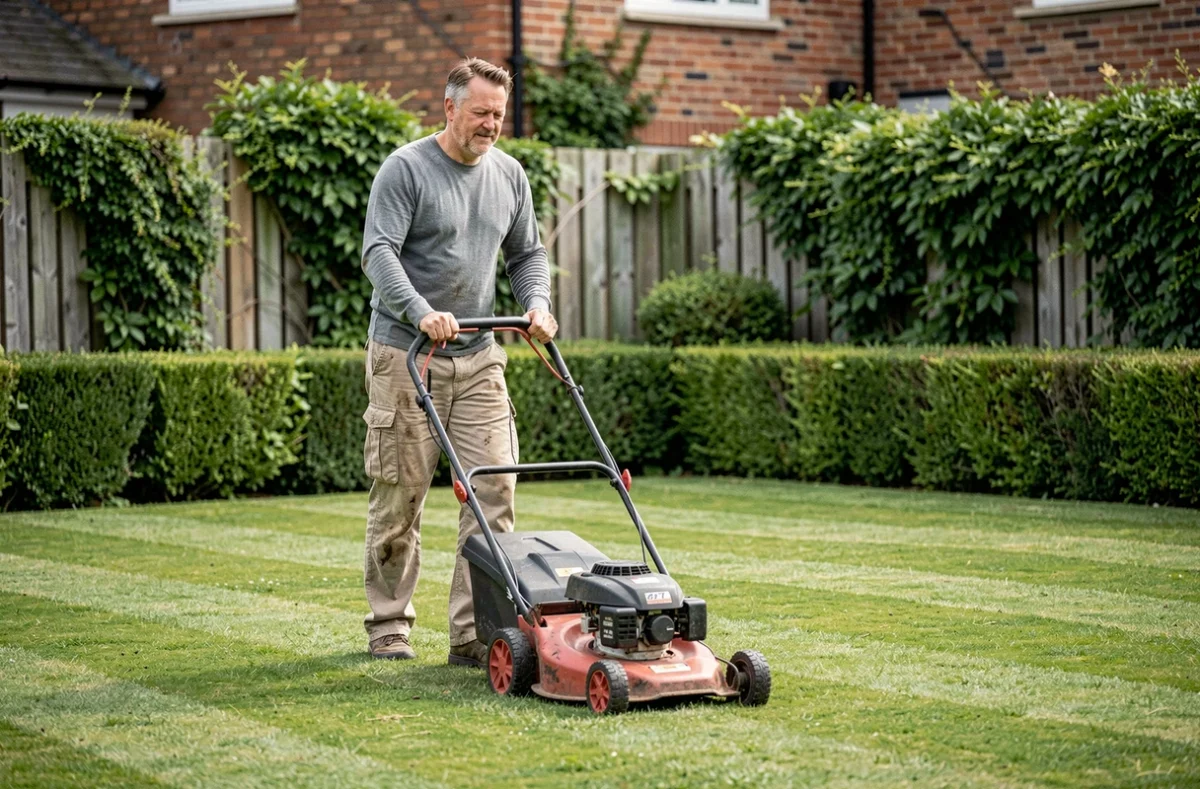
Beyond wildlife, the cutting height influences the health of the lawn. Maintaining a high cut (the maximum position or close on most models) promotes deep rooting and limits the growth of weeds, which reduces the need for manual weeding.
Maintenance calendar: which equipment to mobilize each season
| Season | Main tasks | Mobilized equipment |
|---|---|---|
| Spring | Soil preparation, formative pruning, first sowing | Spade, cultivator, pruner, watering timer |
| Summer | Regular watering, mowing, harvesting in the vegetable garden | Drip irrigation, lawn mower robot, pruner |
| Autumn | Leaf collection, soil amendment, maintenance pruning | Rake, lawn broom, spade, composter |
| Winter | Cleaning and sharpening tools, protecting plants | Sharpening stone, winter cover, linseed oil |
This table shows that a limited set of tools recurs each season. Investing in a few high-quality tools is more cost-effective than multiplying specialized purchases that are rarely used.
The last reflex to adopt: store each tool dry after use, in a shed or on a wall-mounted holder. Humidity remains the primary factor in degrading handles and blades, well before wear related to use itself.