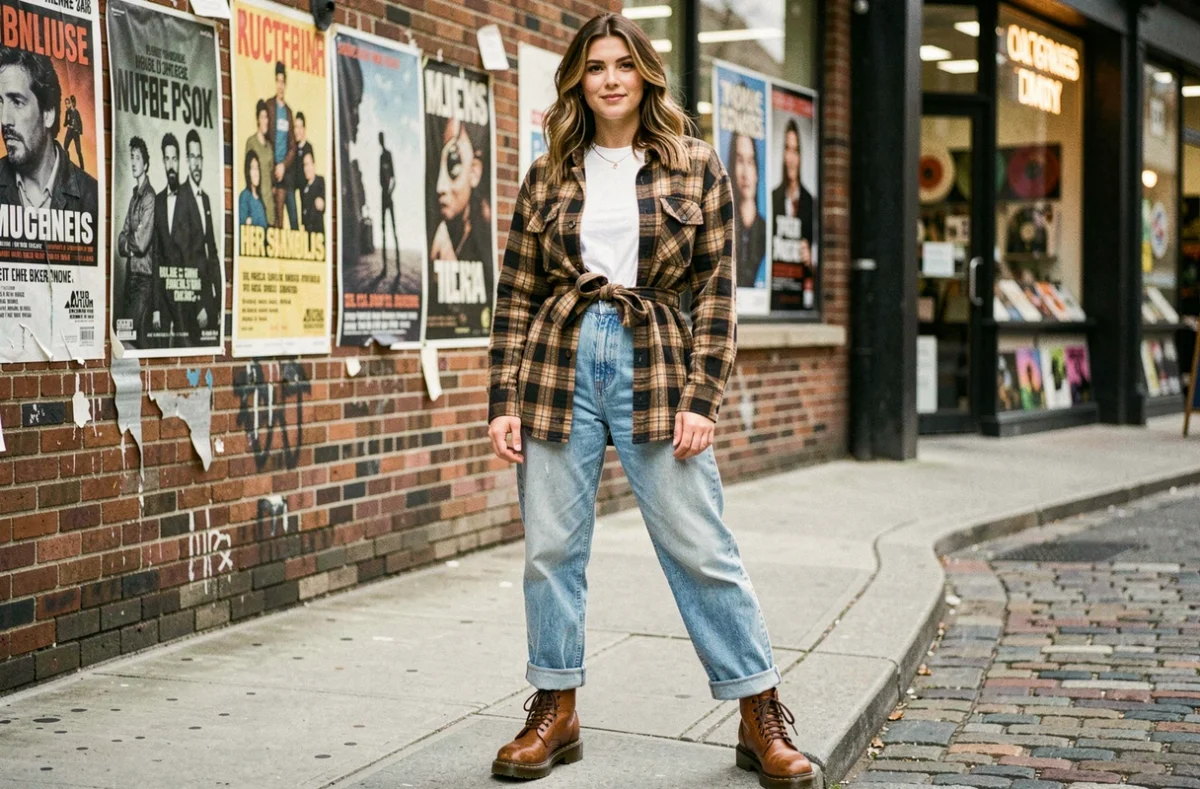
The year 1995 concentrated several simultaneous stylistic breaks that redefined the hierarchy of dress codes. Grunge was fading, minimalism dominated the New York runways, and at the same time, Tom Ford at Gucci and Alexander McQueen in London imposed a radically opposing energy. Understanding the fashion of 1995 means mapping these tensions rather than smoothing them over.
Tom Ford at Gucci Fall-Winter 1995: Breakthrough through Velvet and Satin
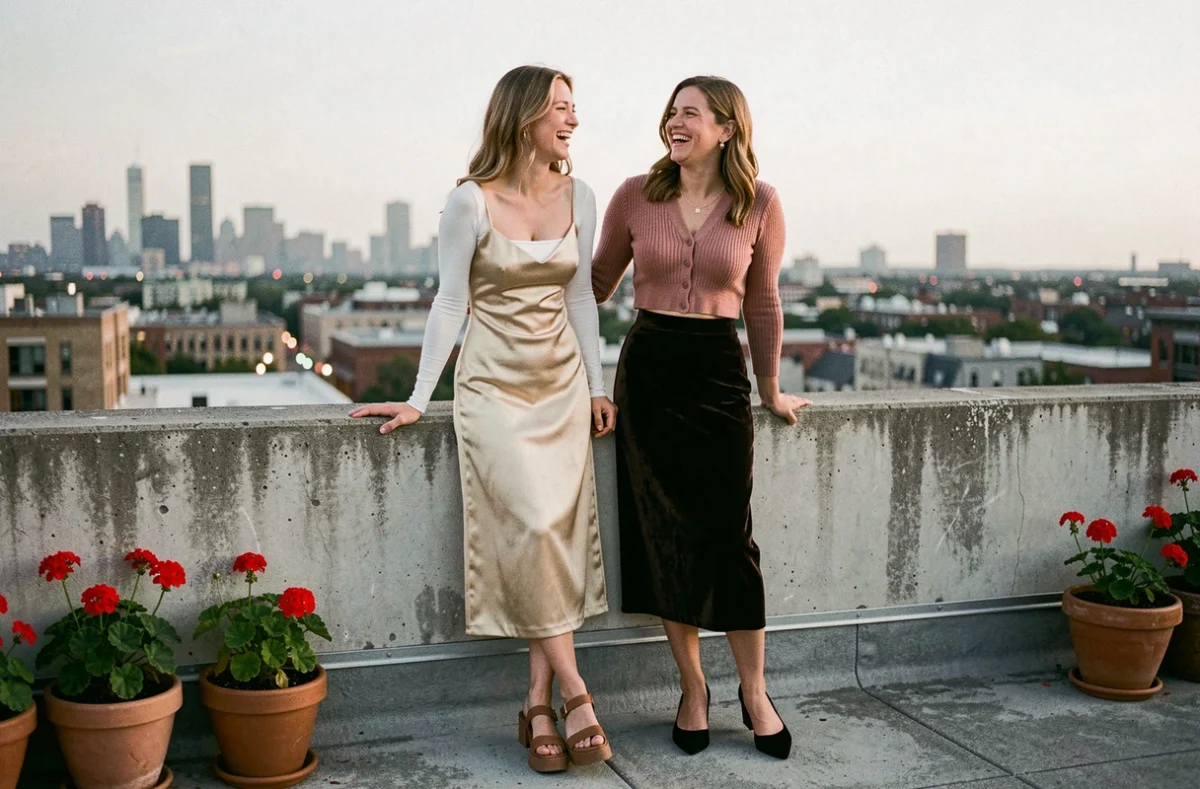
Tom Ford’s Fall-Winter 1995 collection for Gucci reversed the dominant trajectory of ready-to-wear. Where Calvin Klein and Jil Sander were purifying, Ford was saturating. Low-rise velvet pants, wide-open satin shirts, precious colors: the visual vocabulary sharply contrasted with the austere minimalism of the early decade.
This proposal was not a return to classic glamour. Ford injected an openly provocative sensuality, closer to Studio 54 than to Chanel tailoring. The result repositioned Gucci as a house of desire, not just prestige.
We still observe today the direct influence of this collection on contemporary runways: low rise, satin textures, and velvet return in cycles, and each resurgence explicitly cites this Ford moment. By revisiting the key looks of 1995, we measure how this show redrew the contours of accessible luxury.
Alexander McQueen Fall-Winter 1995: Tailoring as Political Manifesto
Alexander McQueen was not presenting a collection; he was formulating a historical commentary. His Fall-Winter 1995 line used torn tartans, partially revealed bodies, and deliberately damaged tailoring to reflect the tensions between England and Scotland. Clothing became a document.
This positioning distinguishes McQueen from almost all designers active in Paris or Milan at the same time. McQueen started from Savile Row patronage to sabotage it from within.
The technical process deserves attention: the raw finishes were not a sign of carelessness, but a precise cutting job, calibrated to suggest violence without sacrificing structure. This mastery of paradox (destroying form while controlling it) remains a standard in London fashion schools.
Vivienne Westwood and British Grunge Style: A Different Take on Denim
The grunge of 1995 was not limited to Seattle flannels. Vivienne Westwood offered a politicized and historicized version of the style, where denim coexisted with corsets and references to the 18th century. This hybridization created silhouettes unmatched on Parisian runways.
- Denim at Westwood was not a basic: it was cut, reassembled, sometimes mixed with tartan or brocade, transforming a popular garment into a collectible piece.
- Punk accessories (pins, chains, extreme platforms) functioned as ideological markers as much as aesthetic ones, positioning British grunge style far from American casual.
The British street style of 1995 blurred the boundary between haute couture, art, and street culture. Independent London media played a catalytic role that mainstream Parisian magazines did not fulfill on this scale.
Thierry Mugler Couture Fall 1995: Spectacle as Fashion Format
Thierry Mugler’s Fall 1995 couture show celebrated the twentieth anniversary of the house with a presentation of three hundred looks. The show lasted an hour, punctuated by a performance from James Brown. This hybrid format, between live performance and collection presentation, had no precedent at this scale in haute couture.
Mugler pushed the construction of silhouettes towards architecture: exaggerated shoulders, corseted waists, rigid materials sculpting the body in volume rather than draping. The fashion trends of the year oscillated between flat minimalism and this structural exuberance, with no common ground.
The technicality of the pieces (molding, metal inserts, three-dimensional cuts) remains a case study in couture pattern making. This show is not just a spectacular event: it demonstrated that a collection could function simultaneously as an artistic performance and as a rigorous technical proposition.
Minimalism vs. Maximalism in 1995: A Structuring Coexistence for Current Fashion
The central tension of 1995 opposed two irreconcilable visions of clothing. On one side, New York ready-to-wear (Calvin Klein, Donna Karan) eliminated all ornamentation. On the other, Ford, Mugler, and McQueen loaded each piece with references, provocations, or complex structures.
This coexistence structured the fashion cycles of the next three decades. Each return of minimalism provokes a maximalist reaction, and vice versa. Current Fall-Winter collections reproduce this pattern without always identifying its origin.
The style of 1995 should not be understood as a single trend, but as a field of forces. Westwood’s denim and Gucci’s velvet have nothing in common textile-wise, but they respond to the same weariness towards the all-sober. Brands that reactivate the nineties codes today benefit from precisely identifying which 1995 they are citing, rather than mixing grunge, glamour, and couture in the same mood board.
The fashion of that year remains a reservoir of technical and conceptual proposals. Political patronage at McQueen, calculated sensuality at Ford, total spectacle at Mugler: each direction opened in 1995 continues to produce measurable effects on contemporary collections.