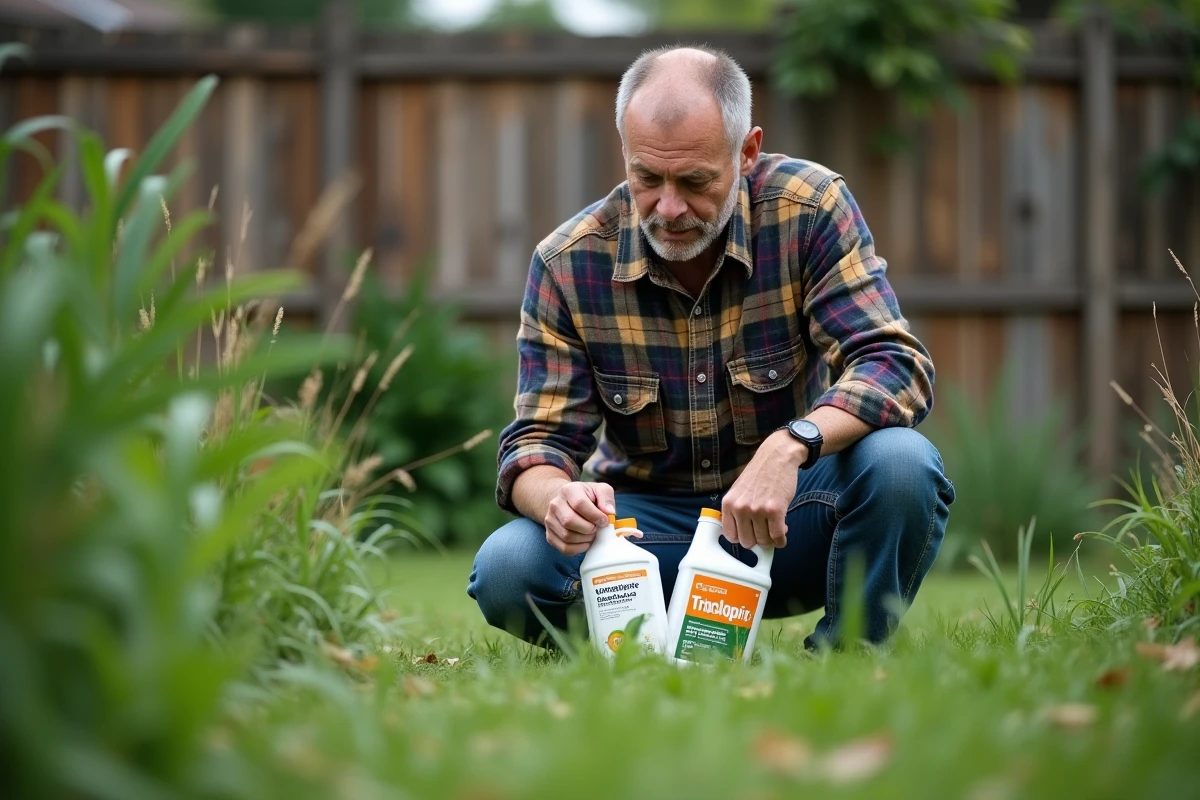
A systemic herbicide does not always eliminate all targeted species. Some woody plants resist glyphosate, despite its widespread use in conventional agriculture. Triclopyr, on the other hand, displays remarkable selectivity: it can eradicate shrubs without affecting most grasses.
Regulations regularly evolve around these substances, sometimes imposing usage restrictions or temporary authorizations. Depending on the soil composition, the persistence of residues varies significantly from one product to another.
Glyphosate and triclopyr: what essential differences for weeding?
Addressing the choice of an herbicide is never just a matter of brands. Glyphosate, known for its ability to annihilate all treated plants, whether grasses, weeds, or even woody species, acts like a chemical bulldozer. Its secret? It blocks protein production via the shikimic acid pathway, leading to the complete death of the plant, roots included. But this effectiveness requires a bit of patience: the first signs of action appear between 7 and 14 days, depending on the vigor of the plants and the conditions at the time of application.
Triclopyr, on the other hand, operates on a completely different level. This selective systemic herbicide targets woody plants and tough broadleaves, without affecting the vast majority of grasses. It mimics auxin, a plant hormone that controls cell growth, thus accelerating the decline of unwanted plants in just 3 to 5 days. This selectivity is sought after to protect certain crops while eliminating brambles and other invasives.
Choosing between these two molecules, as detailed on the page Choosing between glyphosate and triclopyr, requires analyzing the nature of the weeds to control, the floristic composition of the land, and the management objectives. Some professionals sometimes combine both products to cover a broader spectrum when grasses, broadleaves, and woody plants compete for space. Before making a decision, it is essential to consider the types of plants present:
- grasses only,
- presence of brambles,
- complex mixture?
Depending on the answer, the choice of herbicide naturally leans towards one, the other, or a combined approach. On one side, glyphosate imposes a radical action; on the other, triclopyr targets with precision. To deepen this reflection, the dedicated page “choosing between glyphosate and triclopyr” reviews specific uses and contexts where each excels, essential data for anyone managing vegetated areas.
In what contexts is each product most effective?
Glyphosate is particularly relevant on surfaces overrun by a mix of weeds: grasses, broadleaves, woody plants. This versatility makes it an ally for fallow plots or soils to be prepared before a new crop or the establishment of a green manure. Its systemic nature ensures the destruction of the root system, hindering regrowth. However, be careful never to use it on a lawn: it makes no distinctions and wipes everything in its path.
Triclopyr stands out in the fight against woody plants and brambles, those tenacious adversaries with deep roots. When it comes to curbing the regrowth of hedges or targeting isolated brambles, it outperforms many conventional herbicides. It proves valuable in areas where grasses need to be preserved, such as meadows or lawns with differentiated management. This selective herbicide spares the majority of herbs, which is a significant advantage.
The range of tools available is not limited to chemical molecules. Other alternatives exist: manual weeding, thermal methods, mulching, or introducing ground cover plants. Effectiveness will also depend on the choice of sprayer, the timing of application, and knowledge of the plant community. In the face of bramble resistance, some opt for a glyphosate triclopyr mix as a last resort, but each intervention must be considered based on the context, the desired goal, and the rules in force.

Environmental impacts, precautions, and regulations to know before acting
Applying a synthesized herbicide like glyphosate or triclopyr is not trivial: every action impacts living organisms. Glyphosate, by attacking all vegetation indiscriminately, disrupts food chains and can contaminate aquatic wildlife in the event of runoff. Triclopyr, even though it spares grasses, also leaves traces in soils and can affect non-target organisms.
The regulatory framework leaves no room for improvisation. Since the Labbé law (2019), only professionals are authorized to handle these products. Individuals must now turn to biocontrol or natural solutions like pelargonic acid or acetic acid. Before each use, it is imperative to consult the product safety data sheet, adhere to dosages, re-entry intervals, distances from water points, and wear appropriate protective equipment: gloves, goggles, coveralls.
To avoid mistakes or limit risks, always keep these recommendations in mind:
- Avoid any treatment in windy or rainy weather to reduce drift and pollution of environments.
- Meticulously clean equipment after each use to prevent cross-contamination between plots.
Preserving spontaneous plants in certain areas, varying control methods, and integrating alternatives such as manual or thermal weeding, or mulching, contribute to a reasoned management of weeds and reduce chemical pressure on the environment. Choosing sometimes means renouncing ease to preserve balance. Each has their strategy, but the impact of each spraying resonates far beyond the treated field.