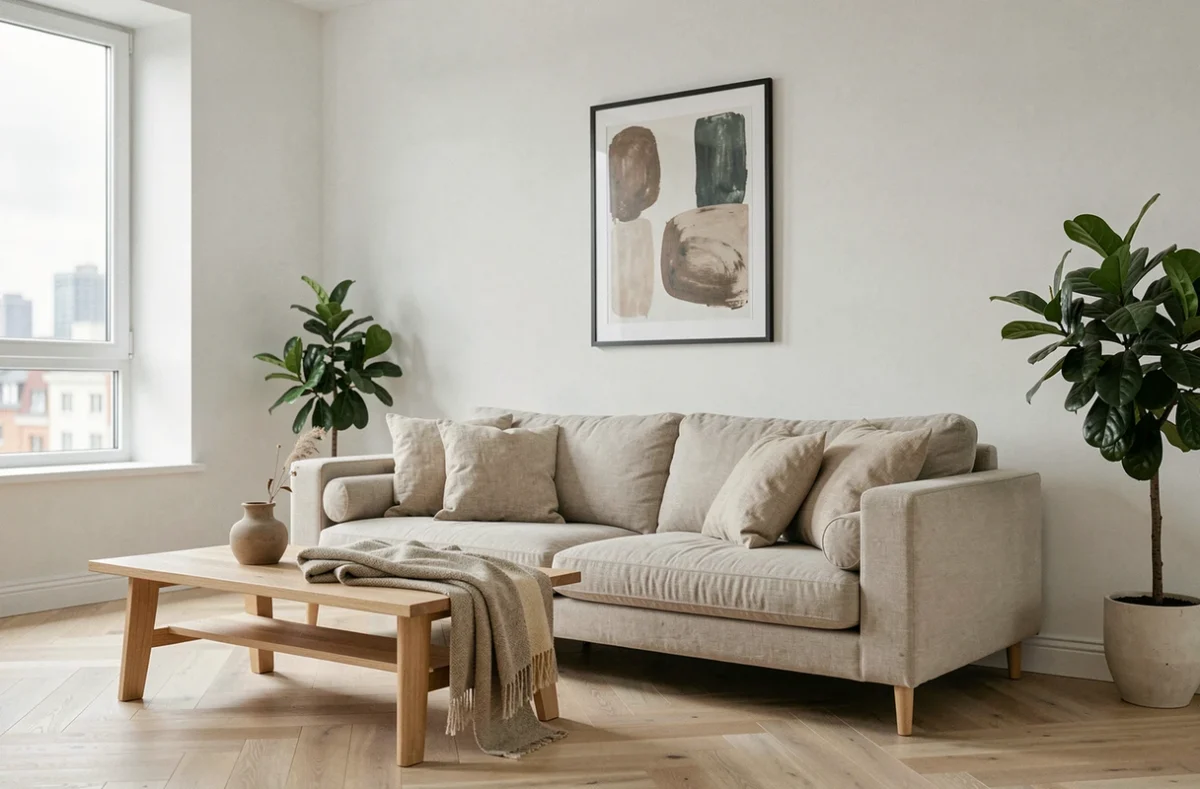
An apartment empty for three months, dull photos in the listing, and visits that lead nowhere. Home staging and interior design come into play exactly at this stage: making a property readable, desirable, and sellable. But enhancing a home is not just about placing a few cushions on a sofa. It requires taking into account the actual condition of the property, its energy performance, and the concrete expectations of buyers.
Home staging and energy diagnosis: the trap of decor without substance
We regularly see beautifully staged properties that stagnate on the market. The reason is not aesthetic; it is technical. A property rated G on the energy performance certificate (DPE) can no longer be offered for rent as of January 1, 2025. Class F will follow in 2028, and then class E in 2034.
Home staging does not correct a poor DPE. Repainting the walls in off-white and installing an XXL mirror in the entrance will not change the energy rating displayed in the listing. For individual houses rated E, F, or G, a mandatory energy audit must be attached to the sale as of January 1, 2025.
Before hiring a home stager, it is essential to check the energy class of the property. If the DPE shows E or lower, it is necessary to estimate the costs of energy renovation work and decide what will be done before putting it on the market. Design comes after, not before.
For owners who wish to combine aesthetic enhancement and an adapted sales strategy, you can access Design en Ville immo to identify relevant enhancement levers based on the type of property.
Depersonalizing a property: a concrete method room by room
Depersonalization is the foundation of home staging. The goal is simple: allow the buyer to envision themselves in each room. In practice, this requires a methodical approach, not an improvised spring cleaning.
Living room and lounge
Family photos, personal collections, and religious or political items are removed. A maximum of three decorative elements per visible surface (shelf, console, coffee table) is kept. An oversized sofa that overwhelms the space should be replaced or removed.
Kitchen
Countertops must be cleared. One or two utilitarian objects (designer kettle, wooden cutting board) are left visible to suggest use without cluttering. Magnets on the refrigerator disappear.
Bedrooms
Neutral and coordinated bedding transforms the perception of a bedroom more than any other investment. Light tones are chosen, mismatched blankets are removed, and bedside tables are made symmetrical.

Bathroom
Hygiene products are removed from sight. Two or three rolled towels and a matching soap dispenser are installed. The blackened silicone seal around the bathtub is replaced for a few euros, and the effect is immediate on the feeling of cleanliness.
Virtual staging: when home staging becomes digital
Virtual home staging has changed the game for empty or poorly maintained properties. Instead of physically furnishing an apartment (cost of renting furniture, delivery logistics), furniture and decor are digitally integrated into existing photos.
The result works well for online listings, where most buyers do their initial sorting. Feedback on this point varies depending on the quality of the service provider: poorly calibrated virtual staging (unrealistic proportions, inconsistent shadows) can have the opposite effect and generate distrust during visits.
For virtual home staging to be effective, several criteria must be met:
- The integrated furniture must correspond to the actual dimensions of the room, verified on plan or on-site
- The chosen decorative style must remain consistent with the neighborhood’s standard and the listed price
- The original photos must be taken with sufficient natural lighting, without excessive wide-angle that distorts the volumes
A successful virtual home staging does not cheat on the volumes. It shows what the room can become, not what it is not.
Interior design and real estate sales: choices that make a difference
Design goes further than home staging. Where staging depersonalizes and neutralizes, design offers an identity. For a prestigious property or an apartment in a sought-after neighborhood, this approach can justify a higher price positioning.
Three areas concentrate the majority of visual impact during a sale:
- Floor coverings: a sanded and varnished parquet floor, or large-format tiles laid flawlessly, immediately anchors an impression of quality
- Lighting: well-positioned contemporary fixtures (pendant above the table, reading lights in the living room) advantageously replace central ceiling lights
- Interior woodwork: repainted doors, handles replaced with a uniform model throughout the property create a visual coherence that buyers perceive without naming it

Not everything is renovated. Focus on the elements that the buyer sees in the first ten seconds of each room. The rest can wait.
DPE coefficient and attractiveness: a parameter to monitor before selling
A decree published on August 19, 2026, states that as of January 1, 2027, the coefficient applied to electricity in the DPE will change from 1.9 to 1.7. Some homes heated by electricity could change energy class without any work.
For an owner considering selling a property rated F heated by electric convectors, this change should be integrated into the sales timeline. Moving to class E alters the perception of the property on listing portals and removes the obligation for an energy audit for individual houses.
Design and home staging then take on their full meaning: a property that moves to class E with careful staging combines two positive signals for the buyer. The energy performance reassures, and the interior layout triggers the desire to visit.
Enhancing a property means articulating the visible and the technical. Home staging makes spaces readable, design gives them character, and the energy diagnosis ensures that everything holds up against current regulatory requirements. A beautiful home that consumes too much remains a problem. A sober and well-presented home sells.