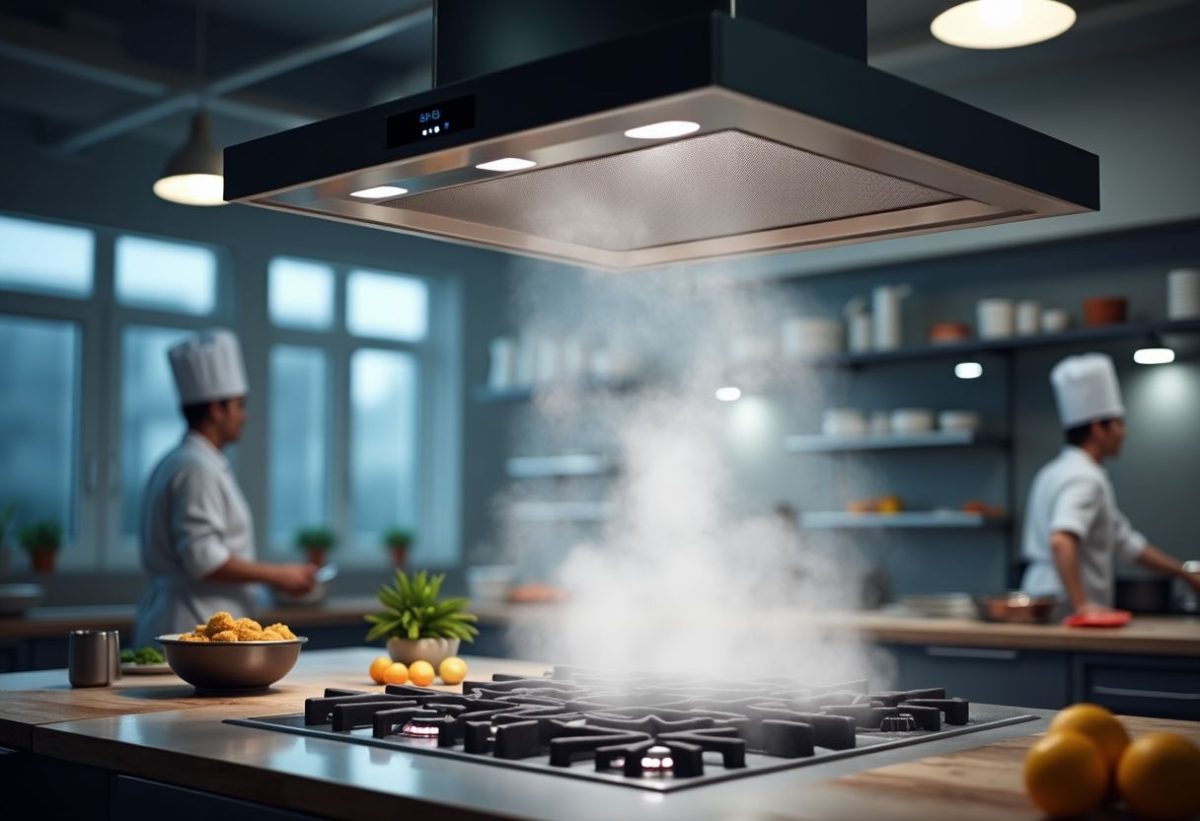
In the world of professional kitchens, hoods play an essential role. They ensure the extraction of smoke, odors, and grease released during cooking. Understanding how the motor of a professional hood works is crucial for optimizing its efficiency and durability.
What is a professional hood
Professional hoods in the kitchen
Professional hoods are ubiquitous in the kitchens of restaurants, cafeterias, and other food establishments. They are designed to handle large volumes of air, ensuring effective and secure ventilation. Their main role is to suck in volatile particles and purify the ambient air.
Role and importance of the professional hood
A professional hood is essential for maintaining a healthy and safe work environment. It protects both employees and equipment by limiting the accumulation of grease and heat. Effective air extraction also helps comply with hygiene and food safety standards.
Types of professional hoods
Extraction hoods
Extraction hoods are probably the most common in professional kitchens. They suck in air laden with grease and smoke to expel it outside.
Tower hoods
These hoods are often used for large-scale installations. Thanks to their design, they ensure powerful and direct extraction of contaminated air.
Remote motor hoods
This type of hood is equipped with a motor placed at a distance, often on the roof, allowing for reduced noise in the kitchen while ensuring effective extraction.
Operation of the professional hood motor
Components of the hood motor
A professional hood motor generally consists of a fan, an extraction box, and a speed controller. Choosing the right motor is crucial for determining the suction power and energy consumption.
Air extraction mechanism
The extraction mechanism relies on a mechanical ventilation system that sucks in contaminated air and expels it outside. Professional hood motors can be of different types, such as the snail motor, which is appreciated for its robustness and efficiency.
Ventilation box and motors
The ventilation box houses the motor and the fan. It is essential that this box is well-sized to maximize extraction efficiency.
Different types of motors
There are several types of motors for professional hoods, each with its specifications in terms of power and consumption. Among them, the snail motor is often used for its high performance.
The role of the speed controller
Speed controllers allow for regulating suction power according to needs. Using a professional hood speed controller helps reduce energy consumption and noise.
Motor power and voltage
The power of the hood motor is a determining criterion for its efficiency. Properly matched power ensures optimal extraction without excessive energy consumption. The motor voltage, whether single-phase or three-phase, must also be compatible with the kitchen’s electrical installation.
Installation and maintenance of the hood motor
Proper installation of the motor
The installation of a professional extraction hood motor must be carried out carefully to ensure optimal performance. It is often wise to call on professionals to guarantee a compliant and safe installation.
Regular maintenance of the professional hood
Regular maintenance is essential for prolonging the motor’s lifespan. This includes cleaning the filters, exhaust ducts, and checking electrical connections. Companies like HYGIS offer maintenance and cleaning services for professional extraction hoods.
Safety instructions to follow
To avoid the risks of fire or malfunction, certain safety instructions must be followed. This includes regular cleaning of the filters and avoiding the use of corrosive substances. In case of unusual noise or weak suction, it is recommended to consult a professional.
For more information on choosing a hood motor and the available solutions, consult specialized websites.