
The Fashion and Leather Goods division remains the financial pillar of LVMH, but reducing the analysis to this single segment overlooks the margin dynamics and resilience that structure the group. We observe that the actual contribution of each branch to operating profit does not always follow the hierarchy of gross revenues.
U.S. Tariffs and European Reshoring: A Structural Lever for LVMH
The increase in tariffs imposed by the United States on Chinese imports of luxury goods creates an atypical situation. Competitors that outsource part of their production to China see their entry costs into the U.S. market rise. LVMH, whose leather goods and haute couture workshops are primarily located in France and Italy, escapes this tariff burden.
This customs cost differential enhances the price competitiveness of the group’s European houses against brands that rely on Asian supply chains. The reorientation of production flows towards Europe, already initiated by several industry players, structurally benefits groups with integrated European production.
For houses like Louis Vuitton or Dior, whose French manufacturing also serves as a marketing argument (“Made in France”), the effect is twofold: tariff protection and valorization of origin. We anticipate that this geopolitical context will push other brands in the LVMH portfolio to repatriate certain production lines, consolidating the group’s industrial base on the continent.
LVMH Fashion and Leather Goods: Why Margin Matters More Than Volume
The Fashion and Leather Goods branch generates the most significant share of the group’s sales. However, analyzing LVMH’s revenue alone masks a technical point: it is also the division that shows the highest operating margin rate in the portfolio.
Louis Vuitton plays a driving role here. The brand controls its distribution directly (no franchises, no significant wholesale), allowing it to manage its selling prices and limit margin dilution. Dior follows a similar trajectory with the strengthening of its exclusive boutique network.
The vertical control of the chain, from the workshop to the boutique, explains the profitability gap with divisions more dependent on third-party distribution. This model is not easily replicable by competitors whose network relies on department stores or multi-brand retailers.
Select Distribution and Fragrances: The Underestimated Divisions of the LVMH Group
Sephora, part of the Select Distribution branch, is rarely mentioned in luxury profitability analyses. Yet it is a regular contributor to the group’s organic growth, thanks to a hybrid physical-digital model and a very extensive geographical presence.
In Southeast Asia, the Sephora-LVMH teams have tested immersive augmented reality experiences targeting millennials. According to a regional director interviewed by Les Echos in April 2026, these initiatives have contributed to a notable local increase in Fashion and Leather Goods sales.
The Fragrances and Cosmetics division, driven by houses like Parfums Christian Dior and Guerlain, plays a different role. It serves as an entry point into the LVMH universe for a younger clientele, with more accessible average ticket prices. This segment does not show the margins of leather goods, but it fuels customer recruitment and long-term loyalty.
- Sephora generates recurring traffic (high purchase frequency, massive loyalty program) and serves as a digital laboratory for the group.
- Parfums Christian Dior capitalizes on the parent company’s notoriety to maintain high volumes without aggressive promotions.
- Guerlain and Benefit provide geographical diversification, with strong performances in Asia and North America.
LVMH Wines and Spirits: An Underutilized Cycle Buffer in Analyses
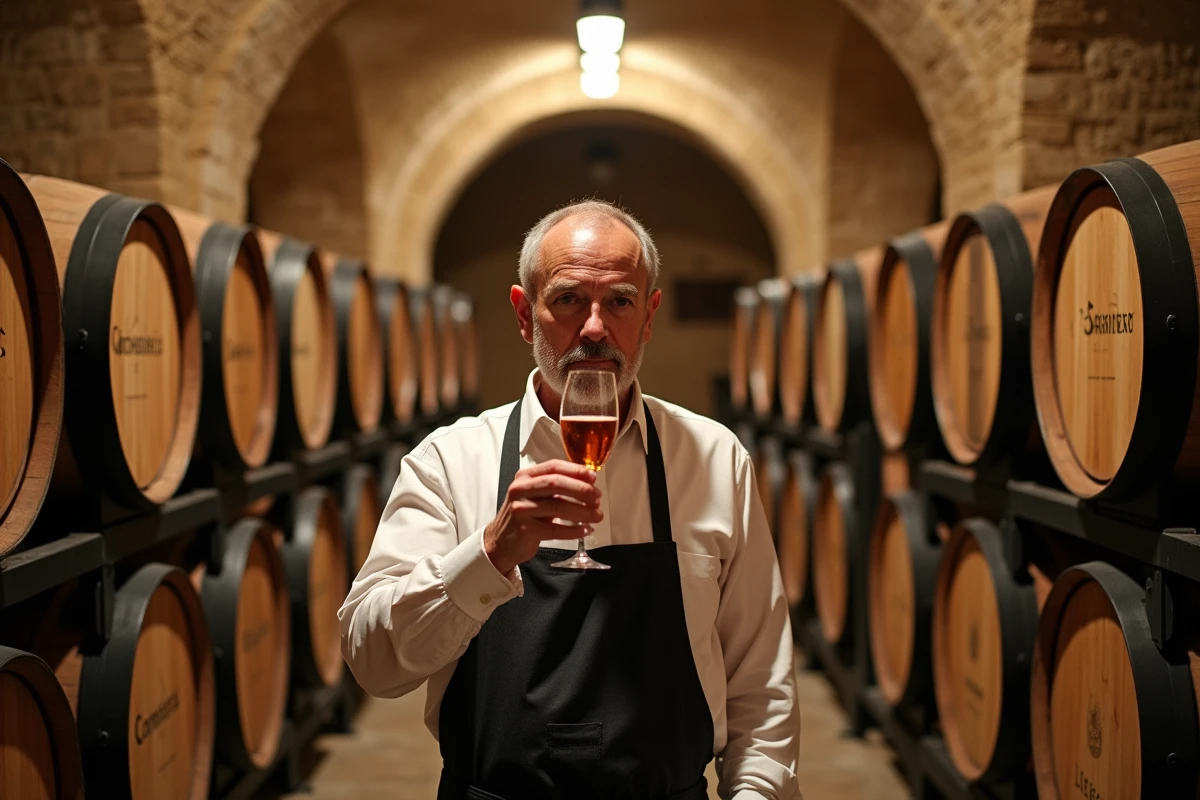
The Wines and Spirits branch (Moët Hennessy) represents a minority share of consolidated revenue. Its role in the portfolio is, however, strategic: it offers a cyclical resistance that other divisions lack.
The Hennessy cognac, which dominates the global market in its category, benefits from relatively inelastic demand in its key markets (United States, China). Premium spirits endure economic slowdowns with less volatility than fashion or jewelry, where purchases are more easily deferred.
We observe that financial analysts tend to underweight this division because its organic growth is more moderate. This is a misreading. In a multi-activity portfolio, the stability of cash flows from cognac finances the growth investments of other divisions.
LVMH Watches and Jewelry: Tiffany as a Revenue Accelerator
The integration of Tiffany & Co. has transformed the Watches and Jewelry division. Before this acquisition, the segment had a modest weight in the overall mix. Tiffany brought a network of owned boutiques, a loyal North American clientele, and an upscale potential that LVMH has been leveraging since the integration.
The group’s strategy is to reposition Tiffany on higher-priced collections while modernizing the brand’s image. This repositioning work takes time, but the leverage on unit margin is considerable. Bulgari, for its part, is consolidating its position in the high jewelry segment with pieces whose average ticket far exceeds that of leather goods.
- Tiffany benefits from LVMH’s expertise in merchandising and retail network management, applied to its historic boutiques.
- Bulgari derives its growth from Asia and the Middle East, two geographical areas where high-end jewelry is growing faster than the luxury average.
- TAG Heuer and Hublot occupy a distinct watchmaking niche, with a masculine and sporty clientele less exposed to fashion cycles.
LVMH’s sectoral diversification is not a passive historical legacy: it is an active mechanism for arbitraging between growth, margin, and resilience. Divisions that do not dominate gross revenue play a role as financial stabilizers or customer recruiters that superficial analyses systematically overlook.